
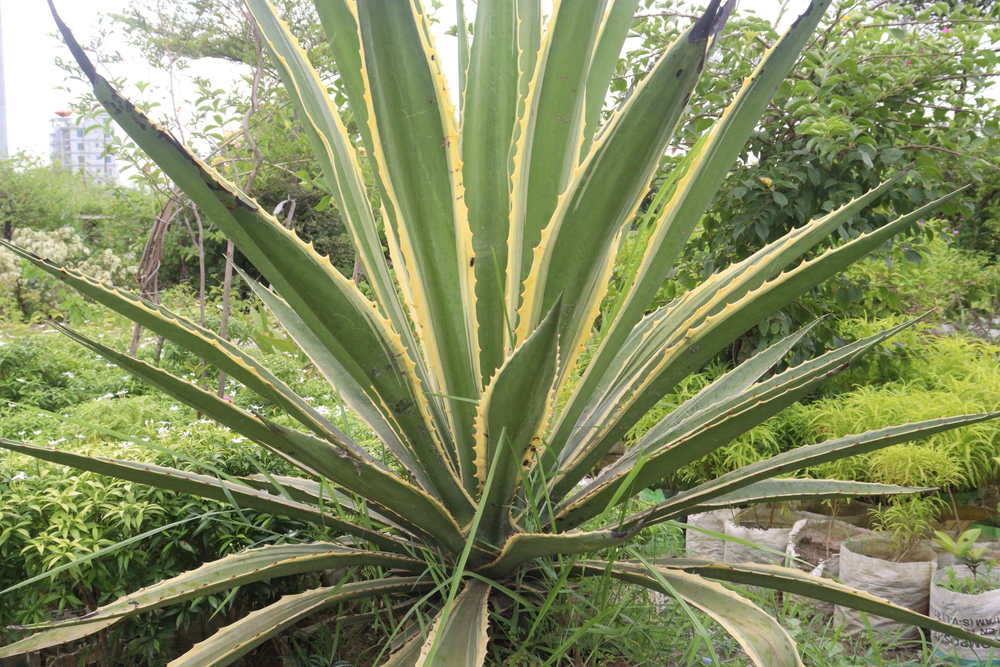
Mezcal’s rich diversity stems from the variety of agave species used, the region of production, and the methods employed by the producers. There are so many little things that can affect the flavor of mezcal, that each bottling can produce subtle differences in taste.

Types of Mezcal and Agave
Here are seven different types of Mezcal categorized by the type of agave plant used and an overview of how they are made:
1. Espadín
Agave Type: Agave angustifolia
Region: Oaxaca and other mezcal-producing states
Production: Espadín is the most commonly used agave for mezcal, accounting for about 90% of production. The plant matures in 6-8 years. Once harvested, the piñas (hearts) are roasted in earthen pits lined with hot stones, which gives mezcal its characteristic smoky flavor. The roasted agave is then crushed, fermented, and distilled.
2. Tobalá
Agave Type: Agave potatorum
Region: Primarily Oaxaca
Production: Known as the “king of mezcals,” Tobalá is made from wild agave that grows in rocky, high-altitude areas. The small, dense piñas have a high sugar content, contributing to a complex, sweet flavor profile. Traditional methods, including pit roasting and stone crushing, are often used.
3. Madrecuixe
Agave Type: Agave karwinskii
Region: Oaxaca
Production: Madrecuixe grows in a tall, cylindrical form and can take 12-15 years to mature. The agave is roasted, crushed, and fermented with natural yeasts before being distilled. The resulting mezcal often has herbal and mineral notes.
4. Tepeztate
Agave Type: Agave marmorata
Region: Oaxaca
Production: This agave species can take up to 25 years to mature, growing in rugged, mountainous regions. The slow growth and challenging harvest conditions contribute to a highly prized, rare mezcal. Traditional production methods are used, resulting in a mezcal with intense, complex flavors.
5. Arroqueño
Agave Type: Agave americana
Region: Oaxaca
Production: Arroqueño agave is a large, wild variety that can take up to 15 years to mature. The production process includes roasting the agave in earthen pits, crushing it with a stone wheel (tahona), fermenting in wooden vats, and double distillation. The mezcal often has floral and earthy notes.
6. Tobaziche
Agave Type: Agave karwinskii
Region: Oaxaca
Production: Tobaziche is another wild agave from the karwinskii family. It matures in 12-15 years and is harvested from rocky, arid areas. Traditional methods, including pit roasting and natural fermentation, are used. The mezcal has a distinctive vegetal and citrus flavor profile.
7. Cuishe
Agave Type: Agave karwinskii
Region: Oaxaca
Production: Cuishe grows in a tall, cylindrical form and matures in 12-15 years. It is harvested from arid regions and produced using traditional methods such as pit roasting, stone crushing, and natural fermentation. The mezcal is known for its earthy, mineral, and slightly sweet flavors.
General Production Process
- Harvesting: Mature agave plants are harvested, and the piñas (hearts) are extracted.
- Roasting: The piñas are roasted in earthen pits lined with hot stones to impart a smoky flavor.
- Crushing: The roasted agave is crushed using a stone wheel (tahona) or mechanical shredder.
- Fermentation: The crushed agave is fermented in wooden vats or stainless steel tanks with natural or added yeasts.
- Distillation: The fermented mash is distilled, usually twice, in copper or clay pot stills.
- Aging (optional): Some mezcals are aged in wooden barrels to develop additional flavors, though many are enjoyed unaged (joven).
Each type of mezcal offers a unique flavor profile influenced by the agave species, terroir, and traditional production methods, making mezcal a diverse and fascinating spirit to explore.
Discover more from O'Kahan Agave
Subscribe to get the latest posts sent to your email.
1 thought on “7 Different Types of Mezcal”